



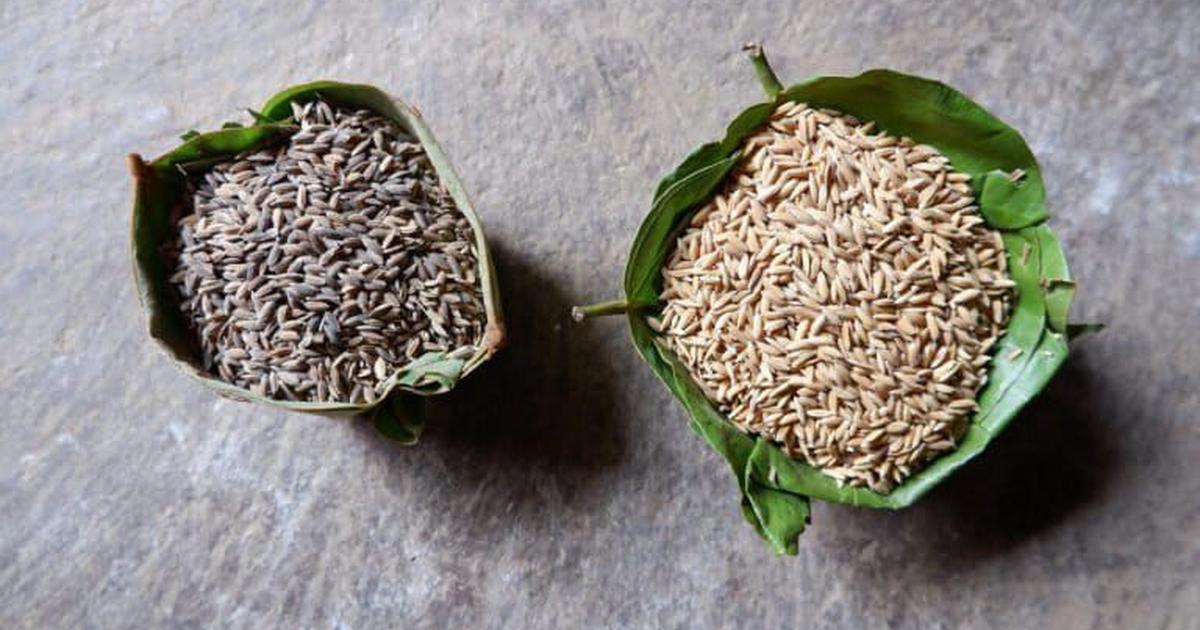
Jhalo Devi and her husband, Basu Oraon, tried cultivating hybrid paddy for five years. The result? Higher costs, more pesticides, and less nutrition. The couple are third-generation Oraon tribal farmers from Jahupkokotoli village in Gumla district of Jharkhand. Like many farmers in the state, they eventually made a choice – to abandon modern hybrids and return to the Indigenous rice their ancestors cultivated for generations.
“Look how healthy these grains are,” says 64-year-old Jhalo Devi, standing in a field that defies the usual image of a lush green paddy crop. Under the winter sun, the grains glow like black diamonds. “This is our dehati dhan (native paddy), Kala Jeera.”
The reasons are both practical and profound. “Hybrids get a lot of diseases; they don’t grow without pesticides,” says Basu, 60. In contrast, their Kala Jeera yields well, fetches a premium price, and needs no fertilisers.
This shift is not merely about tradition; it is a strategic response to climate change and rising costs. Native varieties have evolved to withstand local adversities. “They have built-in resistance and possess diverse genes. In case of drought, flood, or pest attack, they perform better than hybrids,” explains Brijesh Pandey, scientist at Krishi Vigyan Kendra, Gumla. Agroecologist Debal Deb notes that these folk varieties have an “amazing…
Source: ‘That hybrid field? Dead’: Adivasi farmers return to hardy, indigenous grain varieties