



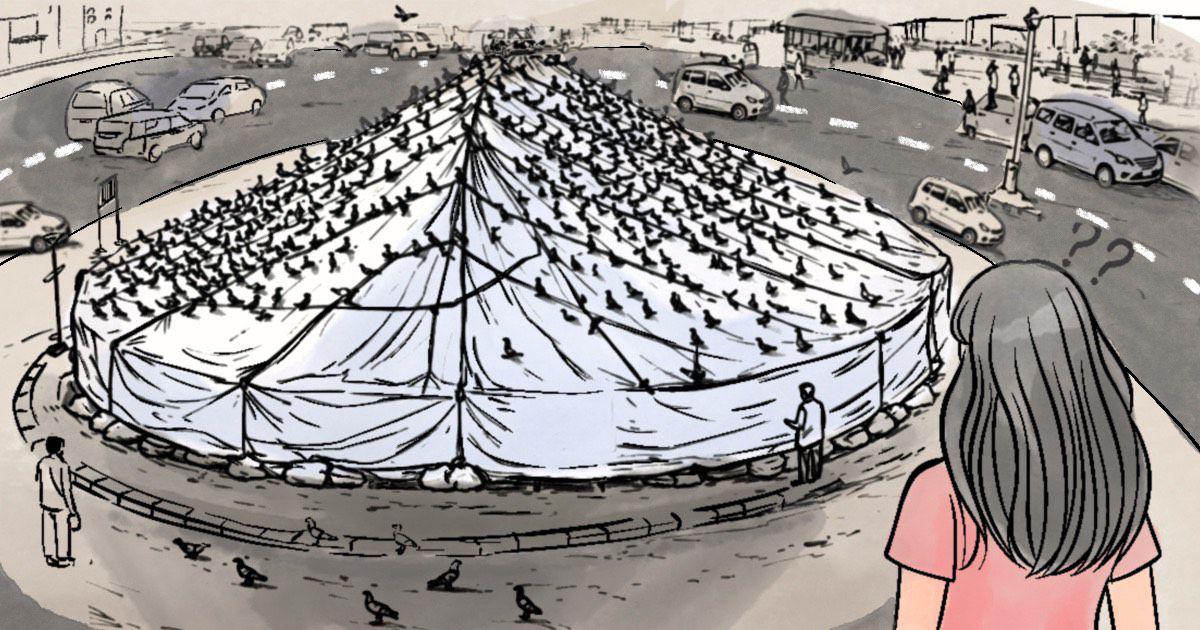
In August, a strange story from Mumbai appeared in the news.
The city’s municipal corporation began to shut down 51 kabutarkhanas in response to a silent health crisis – the bird droppings were causing respiratory troubles for residents. It was not the decision that was strange but the response to it. Rallies and marches were held across the city to demand that the pigeon feeding sites be reopened.
Most of the protestors were Jains, members of a community that believes that feeding pigeons is “punya ka kaam” or a work of charity. They feared that the birds would starve if they were not fed. Even monks from the community went on fasts to press for their demand.
A side note is relevant here. Increasing urbanisation may have wiped out large numbers of birds, such as sparrows, but pigeons have learnt to live around humans, nesting comfortably near air conditioners, on parapets and sheltered ledges. That is why most Indian cities have seen a spike in pigeon populations. It is only in recent years that authorities have begun to identify pigeons as pests whose droppings can cause serious, sometimes fatal, lung infections in humans.
And so I set off to cover the story, chasing pigeons to where they had shifted – to buildings…
Source: Backstory: When protests erupted over a ban on feeding pigeons