


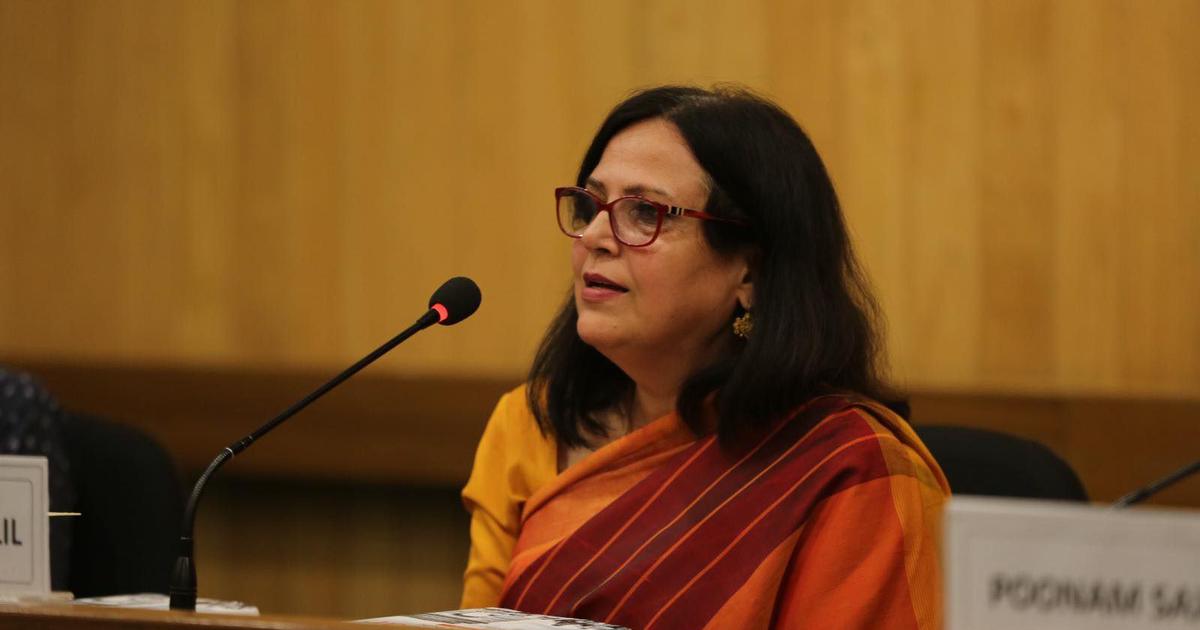
“Whose Urdu is it anyway?” asks Rakhshanda Jalil’s new anthology of translated stories. In these infernally divisive times, when language has become just another bone of contention between geographies, cultures, and political ideologies, when the language one speaks, or doesn’t, can spark violent reprisals, the question the book poses is not merely provocative; it is thought-provoking.
Languages in India have refused to be pinned into docility, flouting restrictions of region and homogeneity. Political dispensations, however, remain committed to the exclusionary cause of affixing inviolable identities to language. Urdu, subject to the same processes, has often been labelled the language of Muslims. Pulling no punches, Jalil’s Introduction engages with the obvious stereotypes associated with Urdu – that it is a language of Upper India, spoken only by “a declining minority of sharif Muslim families” – a formulation that excludes Urdu speakers of places where the language once prospered – the Malwa region, the erstwhile princely states of Bhopal and Hyderabad, even Gujrat of the 17th-century poet, Wali Dakkani. Rejecting the popular perception of Urdu as the language, exclusively, of romance and revolution, Jalil pulls together a selection of 16 stories by non-Muslim writers, from the early decades of the 20th century to the present,…
Source: ‘Whose Urdu Is It Anyway?’: An important anthology that holds multiple identities in easy balance