



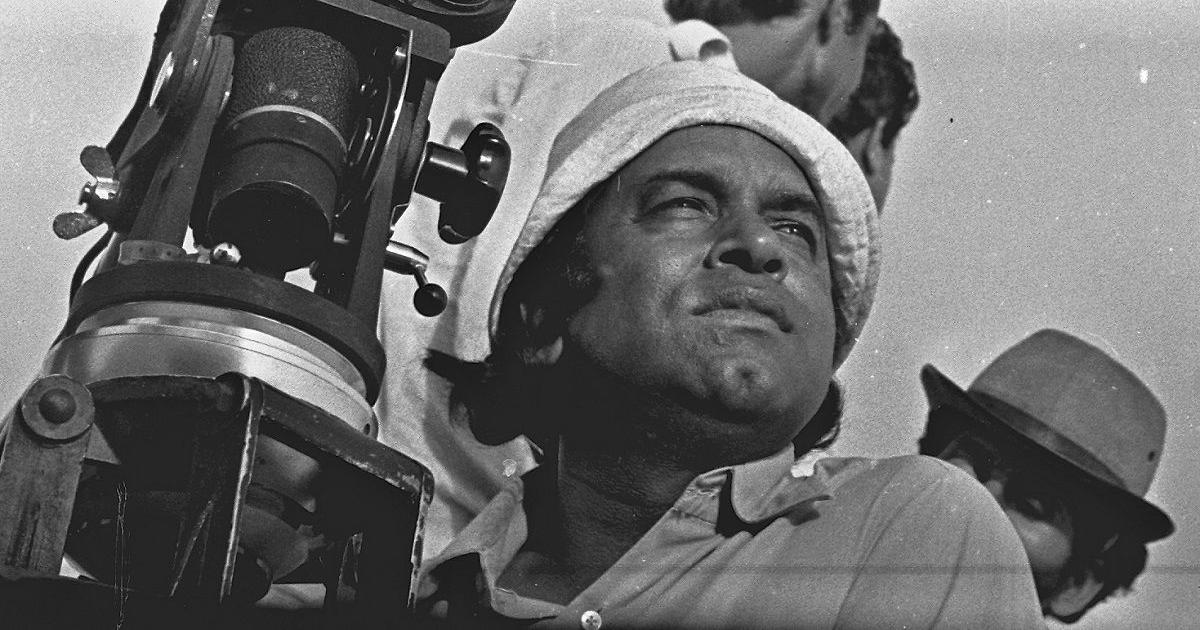
Shakti Samanta (1926-2009) was from the era of Hindi cinema when film school meant a film set. This is where young men (they were nearly always young men) learn the intricacies of how to transform pages of writing into images that moved, spoke and produced feeling.
Samanta was an assiduous student, channelling his first exposure to filmmaking – editing – into a firm grasp of storytelling.
Between the 1950s and 1970s, Samanta rolled out films that are now regarded as evergreeners. Howrah Bridge, China Town, An Evening in Paris, Amar Prem, Aradhana, Kati Patang and Amanush are still remembered for their plots, characters, performances and music – and for making money, a prerequisite for survival in Bollywood.
Samanta worked at a time when directors had to be both formulaic and unique, conventional while also being extraordinary, entertaining even while upholding a sense of morality. Producing volume sometimes came at the expense of quality.
In this regard, Samanta distinguished himself, staying at the top of the pile by paying closer attention than most to the elements that constituted a successful movie. He directed leading actors, among them Ashok Kumar, Madhubala, Rajesh Khanna, Sharmila Tagore, Shammi Kapoor and Amitabh Bachchan.
Howrah Bridge (1958), a prominent example of Indianised film noir, has the iconic club song Aiye Meherbaan. Madhubala’s singer Edna dances into the frame and to the…
Source: Shakti Samanta centenary: ‘There wasn’t a moment when he wasn’t thinking of films’